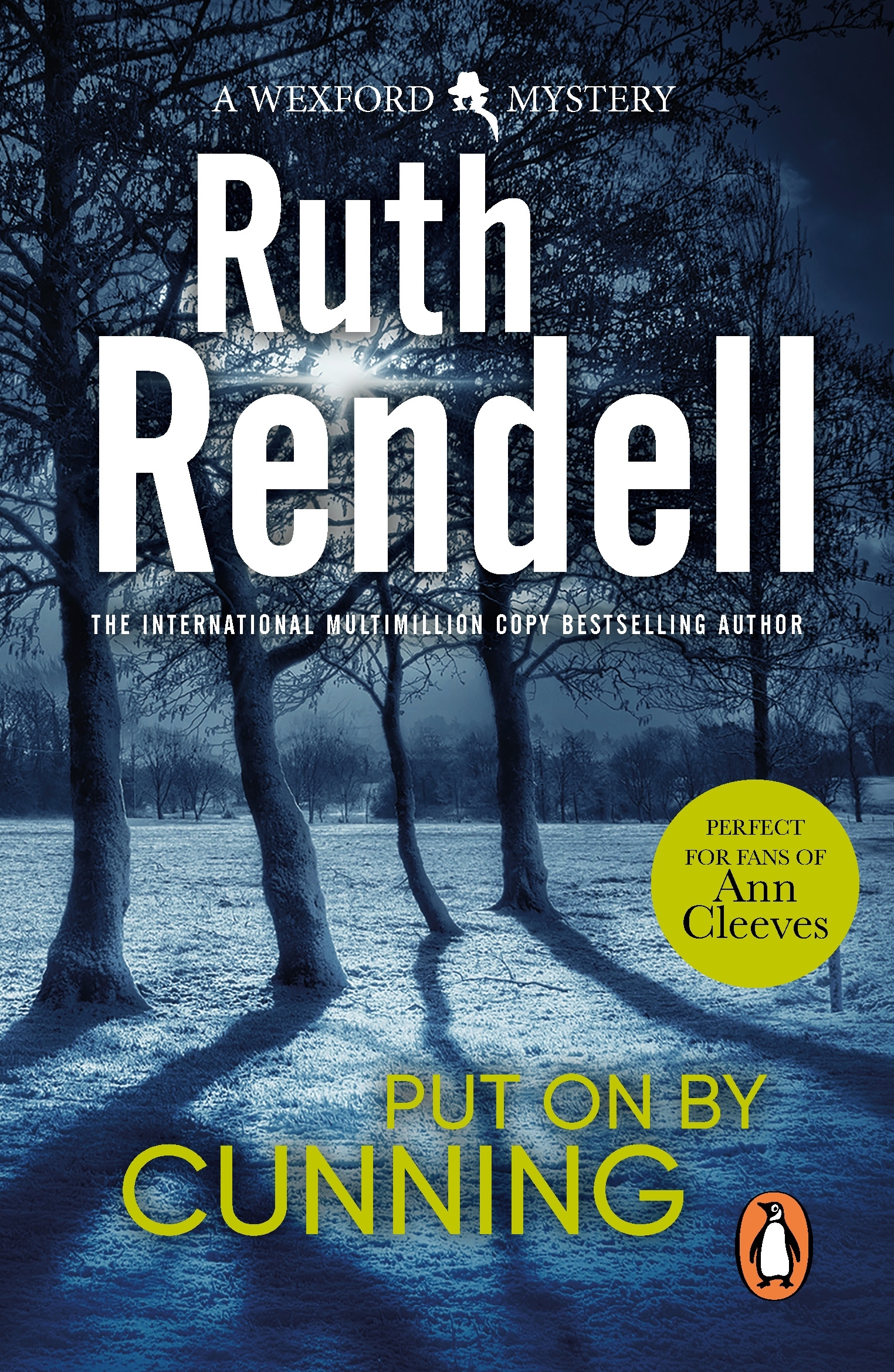
The English Book Review Competition Winner’s Entry (Academic Year 2025/2026)
Ezylene Starr De Guzman – XII 3
Book Review
Book Identity
Title : Put On by Cunning
Author : Ruth Rendell
Publisher : Arrow Books
Publication year : 1982
Summary
Put on by cunning follows Inspector Reginald Wexford as he investigates the death of Sir Manuel Camargue, a world famous flautist. The story started before his death, when Sir Manuel Camargue had just left the church and was enjoying his peaceful evening when his dog, Nancy, had gone outside. He walks outside in the deep snow to search for Nancy, that was when he suddenly was found drowned beneath the ice near his home in Kingsmarkham, a death that was officially recorded as a tragic accident. But Inspector Wexford, upon hearing the news was quickly uneasy and attended the hearing followed by a sudden reappearance of Natalie, a young woman claiming to be Camargue’s long lost daughter after nineteen years of absence. Wexford was overwhelmed by suspicion, especially coinciding suspiciously with Camargue’s renewed acknowledgement of her and expectations surrounding his estate. Within Camargue’s domestic circle are Muriel, the old housekeeper who quickly accepts both Natalie’s claims and Camargue’s death.and Dinah, a younger figure who sees the inconsistency to his death and Natalie’s appearance.
Wexford observes that natalies’s personal history contains gaps, her emotions appear controlled rather than spontaneous, and whenever he attempts to speak with her alone she is consistently accompanied by her instructor, restricting unscripted observation. As Wexford pursues these doubts, his investigation extends beyond Kingsmarkham to France and California, where he traces Natalie’s past and uncovers connections such as Fassbender, a man linked to her earlier life whose existence contradicts her story of abandonment and Jane Zoffany, whose records and testimony further expose inconsistencies in Natalie’s claimed identity. A decisive turning point occurs when it is revealed that Camargue informs Natalie that she will not inherit from
him, threatening both her financial gain and fabricated identity, prompting her to kill him and disguising the crime as an accident. Wexford proved that Natalie is an impostor who assumed the role of Camargue’s daughter to secure inheritance, social legitimacy and emotional recognition.
Analysis
This book has so many layers, from the characters, the society they lived in and the psychological aspect. The biggest takeaway in this book was that it highlights self-deception and Moral Rationalization not of the characters but of society as a whole. The characters don’t see themselves as villains, instead the author explores more how people justify morally questionable acts through emotional logic rather than ethical reasoning. That is seen by how fast people had concluded Sir Camargue’s death as an accident and admitted Natalie as his daughter. This happens when personal pain becomes a shield and transforms to moral entitlement and the accident is reframed as an inevitable “accident”. This shows how truth is socially negotiated, that justice will always be outweighed by convenience. One of the most eye-catching characters in the book is none other than inspector Wexford, he represents a contrasting stance than others, he constantly doubted this case- even when it was ruled out as an accident. Wexford embodies moral vigilance and empathic skepticism, when the whole story is wrapped in emotional reasoning, he is detached and searching for a more ethical reasoning. It also is very uncanny the fact that sir Camargue was a flutist, in which harmony is always controlled and precise, but lying underneath is quiet manipulation in its good tunes- that is shown by the cover in which a man in music sheets is stabbed by a violin bow.
Strength And Weaknesses
Put on by Cunning is strong in its subtle psychological depth, carefully layered plot and the quiet intelligence of inspector Wexford, I personally like inspector Wexford whose methodical questioning exposes how deception can succeed through social complacency. However the novel’s slow pacing and reliance on behavioral inferences shows just how old this story is. It might feel challenging to those who prefer faster and more forensic-driven mysteries.
Conclusion
Overall, Put On By Cunning is not merely a novel but a psychological and social critique that questions how truth is constructed and accepted. Through the quiet resistance to the comfortable narratives made, Ruth Rendell exposes the ease in which society chooses a truth they feel most suitable, even if it’s above the law. The vowel warns that deception does not thrive only in brilliance and manipulation but also through means of willingness of those to stop questioning when answers appear neat and assuring.